

1.Use the right case for the occasion
Most packing follows a simple rule - however much space you have, you will fill it. So, consider the size of the bag or case before you start, being mindful of airline restrictions and space available of course.
Often, we choose luggage based on the length of the trip. While it’s a definite factor, what matters more is the kind of trip. A compact or medium-sized suitcase is ideal for a city break or beach holiday because you can easily pack a lot of lightweight pieces, which you'll need for regular outfit changes when the weather is hot, or you've been walking all day.
An outdoor adventure trip would, by necessity, require a larger suitcase for all practical gear, like thick clothes, bulky footwear, skis or walking boots. Depending on the duration and location, a business trip will mean travelling light and being savvy with interchangeable, staple pieces.
Of course, the best way to fit more into your bag is to have a suitcase that grows with your packing needs. Expandable suitcases double as two bags in one, often starting out carry-on size but expanding to a larger bag when needed. The simplest way to avoid bringing too many things is to buy a hard-sided suitcase, no more than 22 inches tall (so it can work as a carry-on) with a structured shell so you can’t squeeze in any extras, but this requires discipline!
2. Make a list and check it twice
Writing a list can really help you take note of whether you’re over or under packing. Add items to your suitcase about a week in advance—not earlier than that, as weather conditions at the destination will be more accurate closer to the trip.
If written lists aren’t your thing, create a visual list. Lay everything out, hang outfits together, so you don’t forget anything. Then start editing. Ruthlessly. But give yourself time. Up to two weeks. Deciding what to take it what makes packing stressful. Rid yourself of the ‘just in case I need it’ thinking. If and when you need it, you can buy it.
An alternative approach is the one advocated by organizing guru Marie Kondon, who says 'I recommend that you lay everything out first and categorize by type of item to give you a comprehensive look at how many items you have for each category. Then fold everything into its smallest possible size. At that point, before you start filling the suitcase, pare down and be honest with yourself about what you really need for the trip.'
3. Organize your clothes vertically and tightly
Kondo goes on to offer advice about how to organise clothes into the suitcase or bag. 'Clothes should be folded into their smallest possible size. Thin fabrics are best to roll to prevent wrinkles. Another tidy trick is to tuck your folded underwear into bra cups within your suitcase - it keeps the undergarment category together and saves space...pack your items verticall so you can see them all at one glance. That way, you don't have to take out everything to find the one item you are looking for.'
4. Packing Techniques
How you arrange everything in your suitcase is a matter of personal preference. Here are some popular strategies:
Rolling
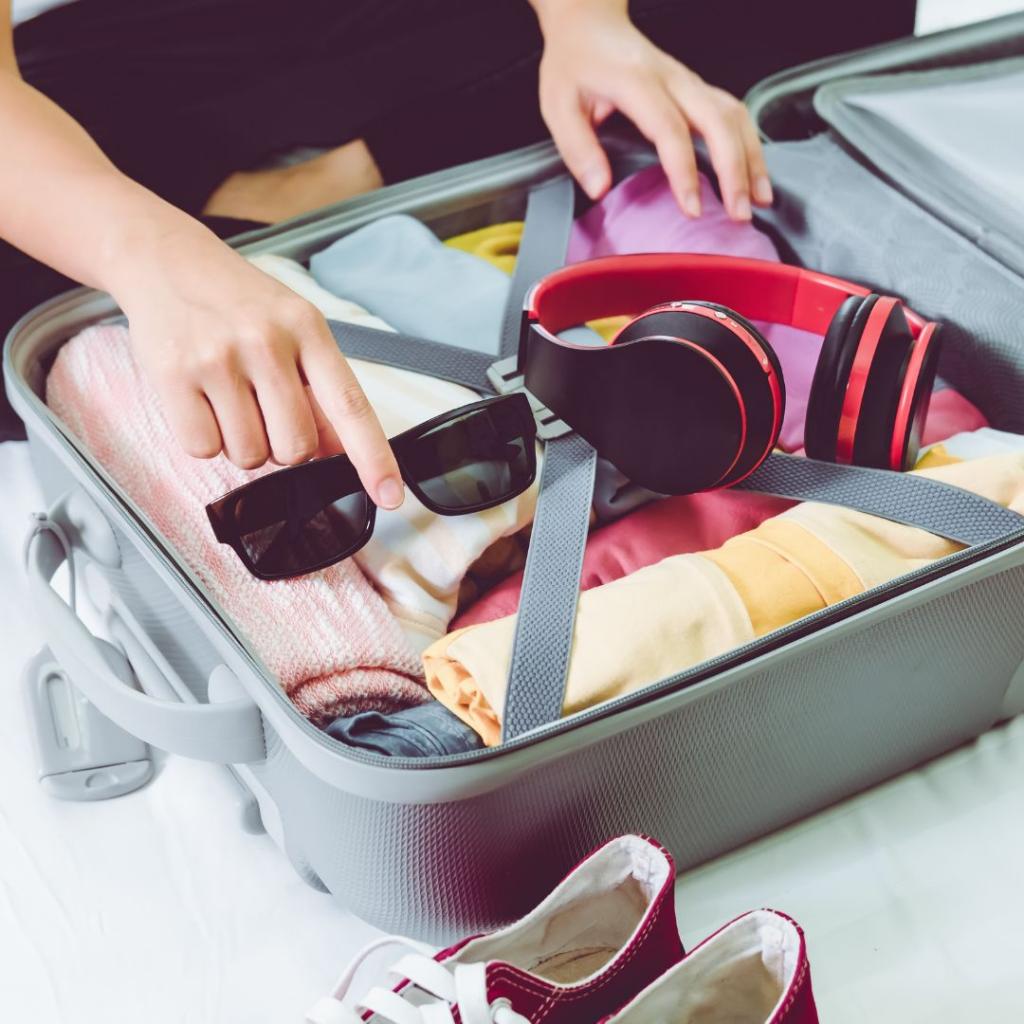
Roll clothes by laying tops facedown, fold in the sleeves and roll from the bottom up. For trousers, put the legs together and roll from the waist down. Once you've rolled everything, place trousers and tops in your suitcase before footwear and accessories, then, fit in any other odd shaped items like hair straighteners, hairbrush etc.
If you have sneakers or boots, stuff them with socks, underwear or other small items to conserve space. Once you've packed your first layer of rolled clothes, flatten them by placing a book on them, or sit on them to compress them before you add the next layer
The 'Bundle' Method
The 'Bundle Wrapping' strategy involves filling a small pouch with soft items items (like socks, underwear, etc.) and then wrapping larger clothing items around the pouch to form a bundle
Packing Cubes
Packing cubes are blocks that keep your suitcase organised, using vertical space and stack together easily - no more trying to fit in oddly shaped items like a puzzle. Plus, the durable cubes are lightweight and thin, so you won't lose any precious space. They help you compress your clothing and 'squish' out extra air and can be organised, so all tops are in one cube, all bottoms in another, dresses in another, and underwear and swimwear in the smallest size. Towels and bulky items will go in the largest cube
Marie Kondo says, “What’s great about the packing cubes is that you can place your vertically folded clothes into the cube from your drawer at home, then transfer them straight into the drawers at the hotel, so it’s easy to unpack at the destination”.
Packing folders
An alternative to space-saving bags and packing cubes, packing folders usually come with boards, which help you fold your clothing efficiently and compact multiple items to save space. Ideal for business trips where more formal shirts or blouses will be the bulk of the packing.
5. Wear your bulkiest clothing
Wherever possible, and as destination, climate and location permits, layer on clothes to save on baggage fees and optimise space in your case. Layering is ideal for adjusting to climate and temperature changes, both at the airport, in flight and at the destination.
6. Keep travel essentials packed
If you are a frequent traveller, keep the items that you always take with you packed. This will help to organise your travel toiletries and accessories ahead of time, so your packing routine is quick, easy, and effortless.
7. Layer plastic dry cleaning bags between clothes
While plastic as a material is somewhat controversial, you can use plastic bags (maybe from dry cleaning) to protect delicate items from accidental pulls, by layering them between your clothes. They help your clothing slide when your bag gets jostled and will help reduce wrinkling!
8. Avoid over or under-packing
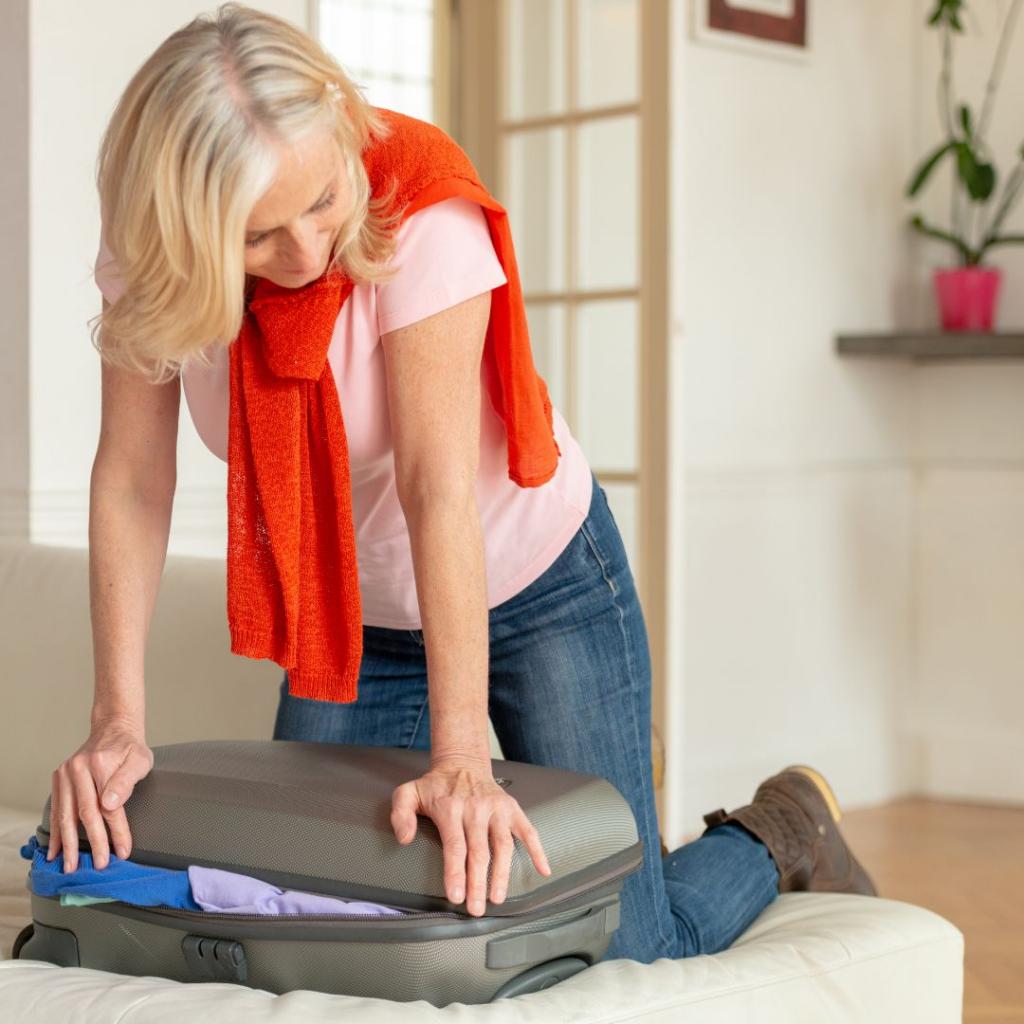
While you may be tempted to leave space for souvenirs, extra room means items can shift and crumple or break. Fill empty spaces with lightweight jute or canvas shopping bags, which can be filled later with souvenirs and gifts from your trip (or laundry - see below). It's important not to over-pack either, since this will create crease marks and can make it extra tricky to repack when you're going home - or heading on to another spot.
9. Bring two small laundry bags
Use one for lights and one for darks. When you get home, throw the pre-sorted loads into the wash A resealable bag/s for last minute wet bathing suits is also a good idea.
10. Take a mini-iron
Whilst some wrinkles and creases are inevitable, a lightweight travel iron will take up very little space and is perfect for touch-ups anywhere if you're 'fussy', or occasion merits.
11. Sort your liquits beforehand
We’ve all seen them – the people who are rummaging in their cases to extract their liquids. Be prepared! Place any liquids you want to keep in your carry-on bag in a separate, clear bag so you can easily pass through security. Check in advance for current restrictions and size guidelines.

12. Bring a scarf for the plane in your carry-on
No matter what season it is, planes are often on the chilly side. Bring a pretty, warm wrap that you can snuggle up in if the temperature drops in the cabin or will be lower at your destination, particularly on return to the UK! You can also fold it and use it as a pillow, if necessary!
13. Carry a reusable water bottle
As long as it's empty, it's okay to bring a water bottle through airport security. Once you're inside the terminal, fill it up at an airport cafe or water station. You'll stay hydrated, and it's 'greener' than having to buy plastic water bottles while sightseeing.

14. Pack the first outfit you'll want to wear on top
If you know you're getting off the plane and going straight out, maybe for a meal or a meeting, plan your outfit and put it into your suitcase last. That way, when you arrive, you won't have to dig through everything else to find it (plus, it will be less likely to wrinkle).
15. Consider clothing material and colours
Often delicate, wrinkly fabrics such as silk are ruled out because they’re “not practical” for travel. However, hanging in the steam from a shower will soon resolve that!
In terms of colour, bring neutrals, but add some colour. Neutrals (black, navy, white, tan) will tie your wardrobe together. Choose one light and one dark neutral. Then add a maximum of three accent colours. Stick to this palette for interchangeable items and coordinated outfits.

16. Think separate pieces, not outfits
Consider every item individually and make sure that it’s versatile enough to pair with many of your other pieces, rather than stands alone daily outfits and if you’re only going to wear it once, don’t bring it! Suitcase space is precious (and limited)! Don’t waste it.
Instead, make room for a piece that you know you can create multiple outfits with. Remember to add texture for depth and use stripes, florals, and leopard print as neutrals– they go with everything and are way more interesting than a plain t-shirt.
17. Accessories are a girl’s best friend.
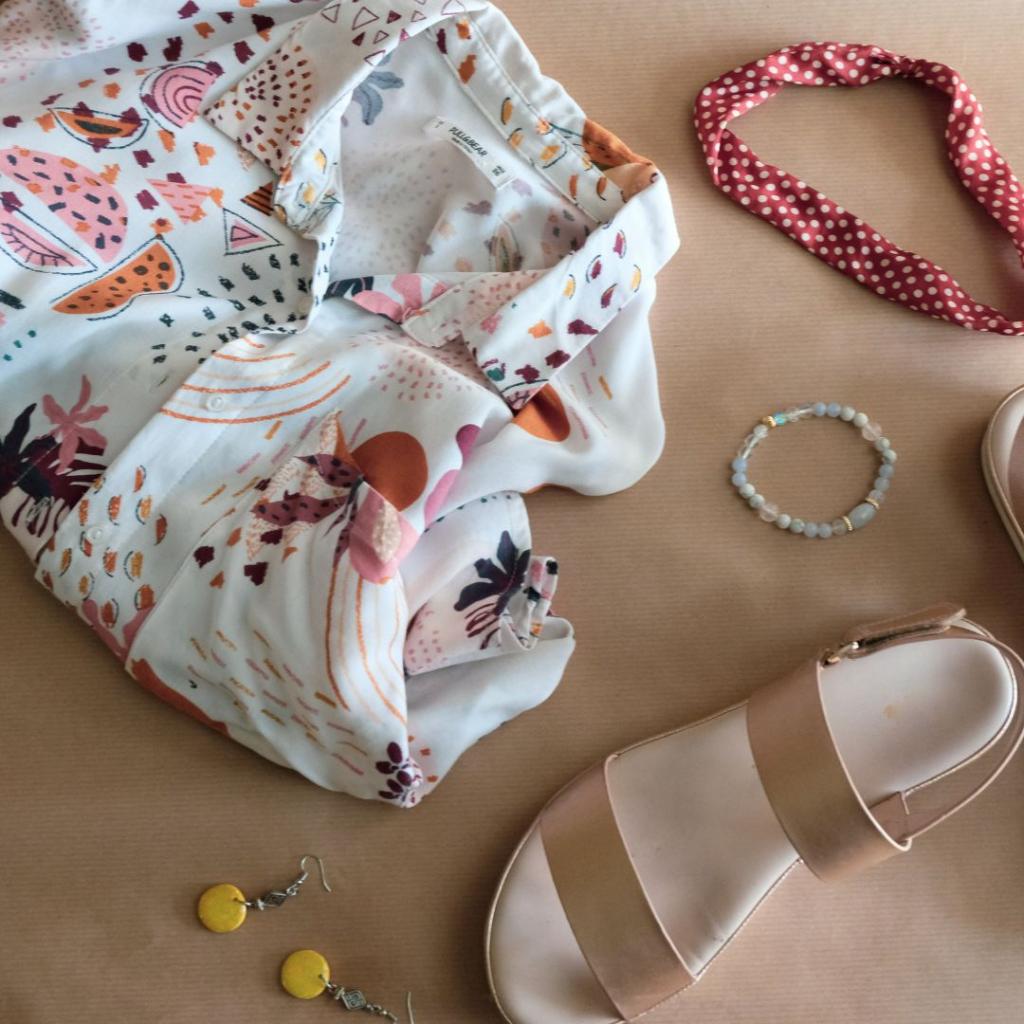
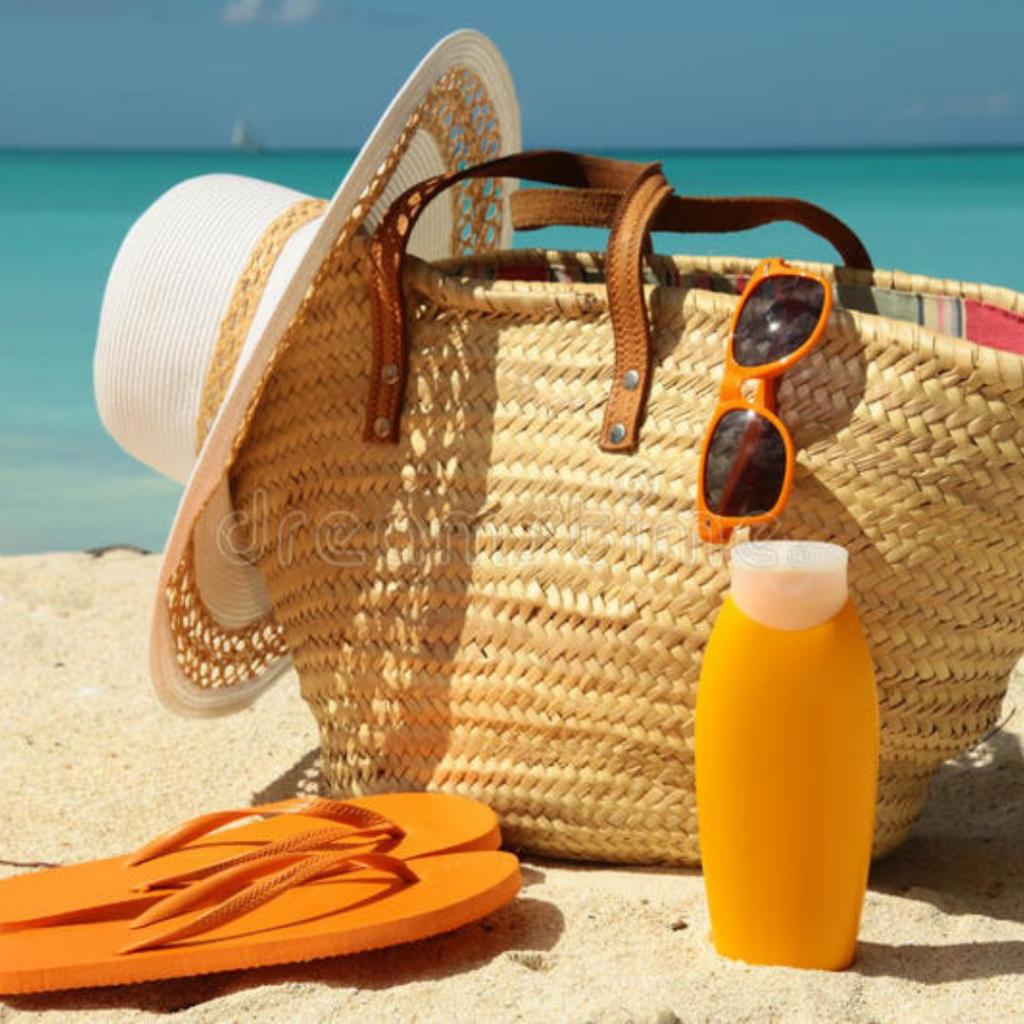
The only time overpacking is good is when it comes to accessories. A travel wardrobe can turn stale without the right extras to step it up – these pieces can make or break your outfits! Bring some amazing statement earrings, head wraps, scarves, floppy hats, handbags, sunglasses – you name it.
18. Be sure to protect against the sun.
It would be remiss of me in a blog about holiday packing not to mention protection against the sun. Our skin works to protect us from harmful ultraviolet radiation, so it is vital to apply sunscreen each morning and throughout the day. This will not only reduce the risk of sunburn and risk of skin cancer but will also prevent the signs of ageing and skin discolouration.
When choosing sunscreen one of the most important things to look for is the level of spf which should be 30 or higher for full protection. Wearing a hat with a broad brim will also protect the face from direct sun.
19. Choose sunglasses that protect
Whilst it’s tempting to choose trendy sunshades to make a fashion statement, it’s important to choose glasses that will block the sun’s harmful UVA and UVB radiation. Long term exposure to the sun without proper protection can increase the risk of eye disease. Polarised lenses will also reduce glare coming off reflective surfaces like water or pathways. Whilst this doesn’t offer more protection from the sun it will make activities like driving or being in the water more comfortable.
20. Find your own wardrobe ‘formula’
There are so many packing ratio formulas to consider but what’s key is to find one that works for YOU! Here are some options:
The 5,4,3,2,1 Rule
Limit yourself to no more than five sets of socks and underwear, four tops, three bottoms, two pairs of shoes and one hat. The list should be adjusted to suit your needs - add a swimsuit and exercise gear or a suit jacket and dress if you’ll need them.
3:1 Ratio
The 3:1 Ratio essentially means three tops for every bottom. Most trips work with nine tops and three bottoms, especially when they're in basic colours that mix and match. No more than three pairs of shoes are also advocated in this approach: running / exercise / walking shoes, a pair of sandals and flip flops. Again, this will depend on the type of trip and location.
Twos
For each day of the trip, think of two tops, two shorts, two T-shirts, two pants, and two pieces of underwear. So, for a business trip, packing two shirts per day is a good idea - one for meetings during the day, the other for dinner and night events.
Travel Capsule Wardrobe
There are several Capsule wardrobe formulas, but for a 2-week trip, this is a good basis and, again, can be adapted to location or type of trip. You can create numerous outfit combinations with this very basic, less than 30-piece capsule wardrobe.
As an example, take one of the neural tops - say a plain t-shirt. You could pair it with the denim skirt and sandals for a casual look - tuck it into a pair of shorts, or wear it with jeans, sandals and the floppy hat for a cute, laid-back outfit, or add some sparkle and wear with the palazzo pants. That's 4 different outfit combos already, based on one top!
Packing is definitely an art and, like most things, gets easier with practice, but hopefully these tips will help you overcome the overwhelm.
Happy packing!
Bon Voyage!